Second Chances: America, Liberia, and the Election of Wilmot Collins

Eric Burin In 1994, Wilmot Collins, a thirty-one year old refugee whose travails had left him weighing just ninety pounds, arrived in Helena, Montana. There, he was reunited with his wife, who had made it to Helena two years earlier with their now two-year old daughter. America, thought Collins, provided

The Humanities in the Age of Austerity: A Call for Papers

As part of our ongoing efforts to think about the changing character of our world, we are very happy to present a call for papers for a digital first issue of North Dakota Quarterly on the humanities in the age of austerity. As the call for papers says, we welcome any

North Dakota Quarterly Welcomes a New Editor

We are very pleased to announce that, as of January 1, Bill Caraher will become the editor of North Dakota Quarterly. Bill is an associate professor in the History Department at the University of North Dakota and specializes in field archaeology, Early Christian and Byzantine architecture, material culture and settlement in

Announcing Micah Bloom’s Codex

In the spirit of collaboration, North Dakota Quarterly is pleased to share in the excitement surrounding the release of Micah Bloom’s Codex from The Digital Press at the University of North Dakota. Micah Bloom’s Codex examines the fate of books in the aftermath of the 2011 Minot flood. It is an ambitious

Short Takes: The Matter of History

Bill Caraher The past two decades have seen an explosion in work on the environmental history and a growing interest in materiality. These two trends intersect in the work of scholars who have come to question whether the division between humans and nature is a useful paradigm for understanding the relationship between the bundle

What is a Dive Bar?

As the weather turns cold and evenings come just a bit sooner, it seems timely to reflect on the character of “a local.” The local dive bar is as ancient as settlements, and Mark Jendrysik, offers a reflective definition of these iconic places in the American landscape. What is a

Monsters (for Halloween)

Hans Peter Broedel This Halloween, I gave some thought to the sort of monsters that I find most horrifying. This is not something I’ve done before, which is perhaps odd because I have a long history looking at other people’s monsters. Historians, psychologists, and anthropologists are always interested in a culture’s monsters, because they are remarkably sensitive

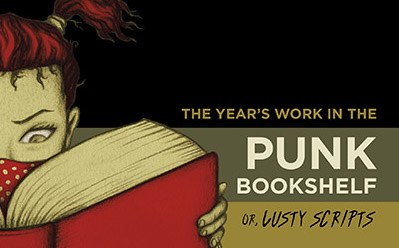
Punk Rock, Lusty Scripts, and Stuff that Matters: An Interview with Brian James Schill

Earlier this month, Brian James Schill first book, The Year’s Work in the Punk Bookshelf, Or, Lusty Scripts, came out from Indiana University Press. We’re pretty lucky to have an in with Brian because, up to recently, he served as undergraduate research coordinator in the honors program at the University of North

On The Classical Debt

Like 98% of the Classicists (or at least Hellenists) in the world right now, I’ve just finished reading Johana Hanink’s The Classical Debt: Greek Antiquity in an Age of Austerity (2017). It’s a remarkable book that traces the history of the concept of “Greek debt” from conversations about the West’s

Gilad Elbom / Sign of the Devil

Sign of the Devil (printed in NDQ 84.1/2) Gilad Elbom A small record store. The address, an old edifice in a seldom-traveled thoroughfare in the center of London, wasn’t easy to find. In America, where things are constructed on a much larger scale, nobody would give a narrow alley that

Blog at WordPress.com.